Home Renovation
The Ultimate Guide to the Best Flooring Options for Your Home
There is no single best floor, only the best floor for a particular room and household. This guide compares the six most common materials and then matches them to the rooms where they work best.
Flooring choices tend to get framed as a beauty contest, but the right answer depends far more on where the floor goes and who walks on it. A material that is perfect for a quiet bedroom can be a poor choice in a mudroom, and the most practical kitchen floor may not feel right in a formal living room. Below, we compare the six materials we install most often, then put them to work room by room.
Quick Comparison
| Material | Moisture tolerance | Scratch resistance | Can be refinished | Feel underfoot | Best suited to |
|---|---|---|---|---|---|
| Solid hardwood | Low | Moderate | Yes, several times | Warm, solid | Living, dining, bedrooms |
| Engineered wood | Low to moderate | Moderate | Sometimes, lightly | Warm, solid | Main levels, over slabs |
| Laminate | Low to moderate | High | No | Firm, slightly hollow without good underlayment | Living areas, bedrooms, offices |
| Luxury vinyl plank | High | Moderate to high | No | Softer, quieter | Kitchens, baths, basements, laundry |
| Porcelain/ceramic tile | Very high | Very high | No | Hard, cool | Bathrooms, entries, laundry, kitchens |
| Carpet | Low | Not applicable | No | Soft, warm | Bedrooms, bonus rooms, stairs |
Product lines vary, so treat the table as a general guide and check the specific product's ratings before you buy.
Material by Material
Solid hardwood
Solid hardwood is milled from a single piece of wood, typically oak, maple or hickory. Its biggest advantage is longevity: it can be sanded and refinished multiple times, so a worn floor can look new again.
- Pros: natural beauty, warm feel, long service life, can change stain color when refinished.
- Cons: sensitive to water and humidity changes, can dent and scratch, not suited to below-grade spaces.
- Maintenance: sweep or vacuum regularly, use a cleaner made for finished wood, wipe spills promptly, and use felt pads under furniture.
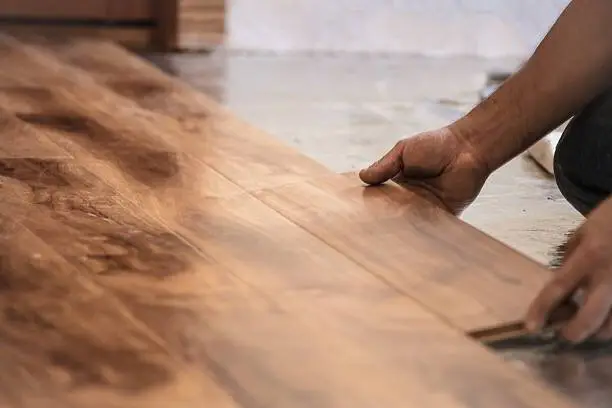
Engineered wood
Engineered wood has a real hardwood top layer bonded to a stable plywood or composite core. That construction makes it less prone to expanding and shrinking than solid wood, so it can go over concrete slabs and in places where solid hardwood would struggle.
- Pros: genuine wood surface, more dimensionally stable, wide-plank formats available.
- Cons: limited or no refinishing on thinner wear layers, still vulnerable to standing water.
- Maintenance: much like solid hardwood.
Laminate
Laminate uses a high-resolution photographic layer under a tough clear wear layer, on a fiberboard core. Modern laminate looks far more convincing than older versions, and the wear layer resists scratches well.
- Pros: very scratch resistant, realistic wood looks, budget-friendly compared with real wood.
- Cons: the core can swell if water gets into the seams, cannot be refinished, can sound hollow without quality underlayment.
- Maintenance: dry or lightly damp cleaning; avoid wet mopping.
Luxury vinyl plank (LVP)
Luxury vinyl plank is a layered vinyl product, often with a rigid core, designed to resemble wood or stone. Its standout feature is moisture resistance, which makes it a go-to choice for lower levels and wet areas.
- Pros: handles spills and humidity well, comfortable and quiet underfoot, wide range of looks.
- Cons: can be dented by very heavy furniture, can fade in strong direct sun, cannot be refinished.
- Maintenance: sweep and damp mop with a manufacturer-approved cleaner.
Porcelain and ceramic tile
Tile is the most water-tolerant option and among the most durable. Porcelain is denser and less absorbent than standard ceramic, which makes it the stronger choice for floors that get wet or see heavy traffic. Wood-look porcelain planks give a wood appearance with tile's toughness.
- Pros: excellent with water, very hard-wearing, endless sizes and patterns.
- Cons: cold and hard underfoot, grout lines need care, dropped dishes break, needs a stiff, flat subfloor.
- Maintenance: regular cleaning plus periodic grout care; sealing depends on the grout type.
Carpet
Carpet still has a place, especially where comfort and quiet matter more than durability.
- Pros: soft and warm, absorbs sound, comfortable for kids playing on the floor.
- Cons: stains, holds allergens and pet hair, shows wear in traffic paths, poor fit for wet areas.
- Maintenance: frequent vacuuming and periodic deep cleaning.
Room-by-Room Recommendations
Living and dining rooms
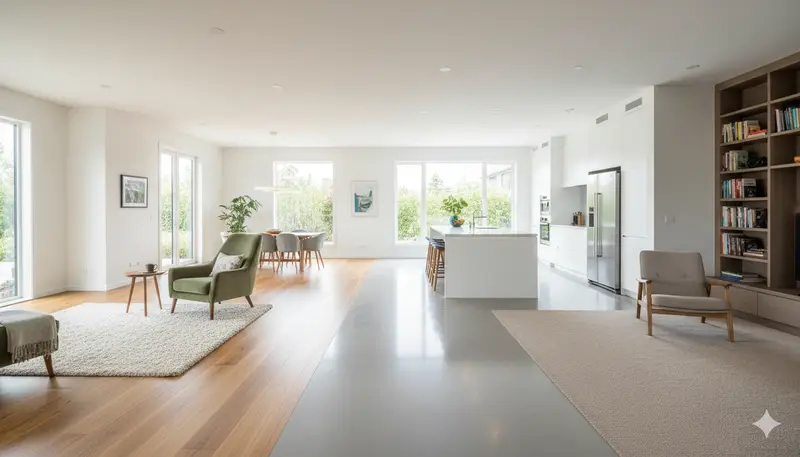
Hardwood, engineered wood or a quality laminate all work well. If the living area opens to the kitchen, consider using one moisture-tolerant material across both, such as LVP, so the floor runs uninterrupted.
Kitchens
Kitchens see spills, dropped utensils and plenty of standing. Luxury vinyl plank and porcelain tile handle the moisture best. Engineered wood can work for careful households if spills are wiped quickly.
Bathrooms and laundry rooms
Tile is the classic choice for full bathrooms because it tolerates water better than anything else. LVP is a good alternative in half baths and laundry rooms where comfort underfoot matters. Avoid solid hardwood and standard laminate in these rooms.
Bedrooms
Comfort leads here. Carpet is cozy and quiet; hardwood, engineered wood and laminate are easier to keep clean and pair well with area rugs.
Basements
Below-grade floors need to handle potential moisture from the slab. LVP and tile are usually the safest options, and the slab should be checked for moisture before anything is installed.
Entryways and mudrooms
Choose the toughest surface you can: porcelain tile or a durable LVP, ideally with a mat to catch grit before it reaches the rest of the house.
Stairs
Hardwood treads look sharp and last; carpet adds grip and softens noise. LVP and laminate stair kits exist but require careful installation at the nosing.
A Few Questions to Narrow the Field
- Do you have pets with claws, or children who spill and drag toys? Lean toward scratch- and water-tolerant surfaces.
- Will the floor sit on a concrete slab or below grade? Rule out solid hardwood.
- Does anyone in the home stand for long periods or prefer a softer, quieter floor? Consider LVP or carpet in those areas.
- Do you want a floor you can refinish in the distant future? Hardwood is the main option that allows it.
Putting It Together
Most homes end up with two or three materials: a consistent hard surface through the main living areas, tile or LVP in the wet rooms, and possibly carpet in bedrooms. Planning transitions between them at doorways keeps the house feeling cohesive. Once you have narrowed down materials, our guide to what affects flooring installation costs covers how to plan the installation itself.
Get Help Choosing Your Floors
Top Quality Home Improvement installs hardwood, laminate, vinyl, tile and carpet throughout Knox, Anderson, Blount and Union counties. We can look at your subfloor, talk through how each room is used and recommend materials that fit. Visit our flooring services page to learn more, or schedule a free in-home estimate.
Frequently Asked Questions
Is luxury vinyl plank better than laminate?
Neither is better everywhere. Luxury vinyl plank handles moisture better, so it suits kitchens, baths, laundry rooms and basements. Laminate often has a harder wear layer and a more solid feel underfoot, making it a strong choice for dry living areas and bedrooms.
Can I put hardwood in a basement?
Solid hardwood is generally not recommended below grade because of moisture and humidity swings. Engineered wood, luxury vinyl plank or tile are usually better fits for basements, depending on the slab's condition.
What flooring stands up best to pets?
Hard, scratch-resistant surfaces with good moisture tolerance, such as luxury vinyl plank and porcelain tile, tend to handle claws and accidents well. Textured or lighter-toned finishes also hide minor scratches better than dark, glossy ones.
Should I use the same flooring throughout my house?
A consistent floor through connected living areas makes a home feel larger and more cohesive. Wet rooms and bedrooms can switch materials where a doorway or transition gives a natural break.
Categories: Home Renovation, Interior Upgrades, Flooring & Surfaces